

We are the abyss future historians will avoid staring into
2026›08›12 · 4 min read

I keep hearing this claim: „Future historians won’t be kind to us. Future historians will call us fools. Will shake their learned heads in disbelief.“
Well, what does it take for a time to be of interest to historians at all?
I remember my own school days. Ten percent of our history lessons were mostly numbers. These numbers were mostly the years in which different wars happened. Of course, as I went to school in Germany, the other 90 percent of history classes were about the one event whose name I never fully understood, given that it literally translates to „burnt offering“ (Wikipedia »Holocaust (sacrifice)«)).
History is about numbers, years and victims.
So, what numbers will future historians write about us?
Well, we are at war. We are at war against our own kind.
Every year, worldwide, an estimated 73 million children are killed in their mothers‘ wombs (pubmed.ncbi.nlm.nih.gov, 1.9.2020).
In comparison: all wars of the entire 20th century, the bloodiest century ever, together caused about 230 million deaths (clingendael.org, 20.6.2006).
Every three years we tear from their mothers‘ wombs as many souls as were killed in all wars of the 20th century combined.
In the early nineties that number was „only“ every four and a half years. 50 million dead children per year (guttmacher.org, 11.5.2016). The researchers will tell you the rate per woman has fallen. The count has not. We are getting faster at killing our unborn children.
Just this week, in early August 2026, it was signed into law in Massachusetts, USA, that children may be killed right up to birth (foxnews.com, 10.8.2026). Hell truly is empty, as the devils are here, writing the laws for feminists to sign.
I hear that the signing governor, a woman, identifies as Catholic. But we know she is at no real risk of excommunication, as she wasn’t trying to save souls.
The feminists around that „Catholic“ applauded cheerfully during the signing. Was there ever in human history a group of people so broken and misled that the women would cheer the permission to kill their own babies?
This is an age that rips its innocents into pieces, then feeds the tiny bodies to mini-ovens as „human waste“ (law.cornell.edu, 28.5.2019).
Or maybe they pass the baby parts on to „research“ (science.org, 5.1.2017).
So, what will future historians write when they do the research about us? I barely dare to ask.
„Future historians will call us fools,“ so we say, and „they will shake their learned heads in disbelief.“
Oh, if it were only „fools“ that they will call us.
Are we „monsters“?
No, even monsters, demons and devils care about their own, I am sure.
Future historians might ask whether a time and age that treats its young as garbage to be incinerated qualifies as human itself.
Future historians won’t shake their heads in disbelief; they will avert their eyes in disgust. We are the abyss that they will avoid staring into.
Yes, that is our best hope regarding history. That future historians will be so horrified by us that they will refrain from writing about us altogether.
Alas, a higher court still sits. He who is not afraid of us and, despite all the horror, still loves us, does keep book.
That book will be opened.
John the Apostle saw it happen:
And I saw the dead, great and small, standing in the presence of the throne. And the books were opened: and another book was opened, which was the book of life. And the dead were judged by those things which were written in the books, according to their works.
Keep writing, Wegner!
Writing these essays is only possible with your support. Become and stay part of my work!
Please choose your voluntary reader contribution:
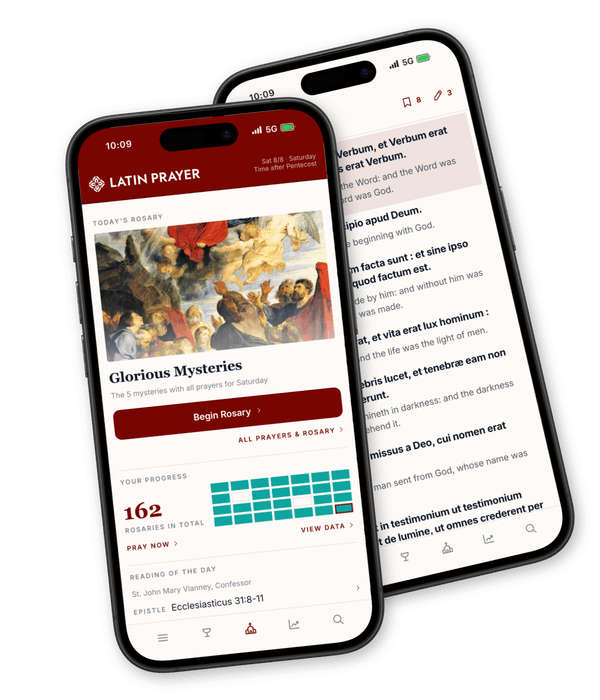
Latin Prayer: my app for praying in Latin
The Rosary, the Mass, the Vulgate and the prayers of the Church — Latin and English side by side, line by line, much of it with audio, so you can hear how it sounds. Free, no ads, for iPhone and Android.
Email Notification
When there’s a new post, you’ll get a short email — at most once a day. Free, and you can unsubscribe anytime.
Der Essay We are the abyss future historians will avoid staring into von Dushan Wegner ist auch online zu lesen: https://www.dushanwegner.com/essays/the-abyss/, und auf dushanwegner.com finden sich noch viele weitere Texte, Bücher und sogar T-Shirts zum Thema!
