

- English
- German
In the USA, as I record this, a mother is standing trial for strangling her three children. Her legal team is blaming the atrocious act on “postpartum psychosis” (foxnews.com, 30.7.2026).
On the one hand, there have been ghastly acts of this kind all through human history. On the other hand, this case feels paradoxical, as the woman enjoyed all the support and advantages one could imagine for a modern mother. A house, a loving and high-earning husband, psychiatrists, and medication for her mental health problems (bostonglobe.com, 7.8.2026).
Yet still, at one point she decided to trick her husband by sending him on an errand, and she used that time to end her children’s lives. Three exercise bands were later entered into evidence (foxnews.com, 7.2.2023).
Unfortunately, this is not the first time a person on psychiatric medication has committed violent acts. And also: The “help” she received perhaps isn’t the help a mother needs. Visits to the psychiatrist are not the nurturing context of a village and a larger family. Chemicals rearranging your brain aren’t a replacement for meaning and a healthy spiritual life. And even her defense team names the medication as a possible part of the problem. But this case is still larger than even that.
A number of women across at least the USA, both online and in real life, are declaring a weird form of understanding and solidarity with this woman, who is standing trial. They have put on pink clothes and are protesting outside the court—supporting her (pbs.org, 21.8.2026).
I have heard of relationships and wedding plans canceled when men discover that their girlfriend or fiancée justifies the defendant’s acts. You hear phrases like “I don’t want the future mother of my children to think like that.” And you hear responses like “You really dodged a bullet there.”
On TikTok, which in the USA is now less, let’s say, “Palestinian-friendly,” but even more an anti-Western cesspool, women are also presenting themselves as super-suffering from having to take care of their children while their husbands work and provide. What a humiliation for the poor husband.
And it gets worse: In the context of this one prominent case, a number of other similar cases are coming to public awareness.
For example: An ex-cheerleader kills her newborn son, stuffs his body in a plastic bag (nypost.com, 21.08.2026).
Some cases are so recent that they feel like copycat murders: “A North Dakota mother has been arrested after killing two of her children and attempting to murder the third” (themirror.com, 08.08.2026). Before killing her children, the mother reportedly called the father, telling him he could “say goodbye to the kids.”
I could go on—it’s grim. But I ask you: How does one deal with this kind of horror? How do we deal with the fact that we are living in the same society as these women?
Some say that women killing their children are simply continuing the logic of abortion out of convenience. While in that particular case the defense’s interpretation is “psychosis,” the “understanding” of the defendant sometimes feels a bit close to “understanding” her act.
In fact, there would be a grim logic to it: If it is legitimate to end your child’s life shortly before birth because the child’s existence could inconvenience you, why not after birth?
Some have put forward the theory that a large number of these women publicly supporting the mother on trial have themselves aborted a child. Their support for that woman could be a form of compensation for their own deeds.
Both are plausible. Actually, it’s obvious.
Yet it’s a larger battle. A battle we won’t win with laws and debates alone.
Saint Paul explains the war we are really engaged in:
For our wrestling is not against flesh and blood; but against principalities and powers, against the rulers of the world of this darkness, against the spirits of wickedness in the high places.
Keep writing, Wegner!
Writing these essays is only possible with your support. Become and stay part of my work!
Please choose your voluntary reader contribution:
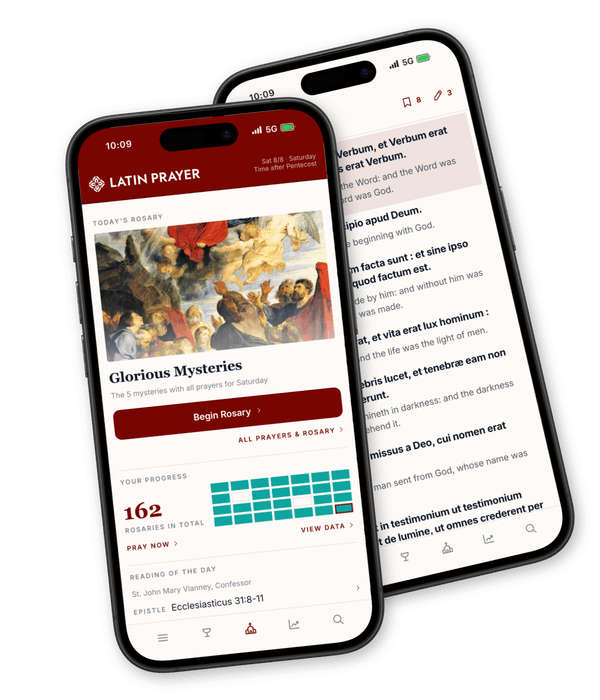
Latin Prayer: my app for praying in Latin
The Rosary, the Mass, the Vulgate and the prayers of the Church — Latin and English side by side, line by line, much of it with audio, so you can hear how it sounds. Free, no ads, for iPhone and Android.
Email Notification
When there’s a new post, you’ll get a short email — at most once a day. Free, and you can unsubscribe anytime.
Der Essay Say Goodbye to the Kids von Dushan Wegner ist auch online zu lesen: https://www.dushanwegner.com/essays/say-goodbye/, und auf dushanwegner.com finden sich noch viele weitere Texte, Bücher und sogar T-Shirts zum Thema!
