

Winston Churchill is said to have quipped: „The best argument against democracy is a five-minute conversation with the average voter.“
It is vexing how frequently this bon mot comes to mind these days. For instance, in the context of the tiresome „opinion vs. facts“ debate.
A well-known battle slogan of the totalitarian new form of state „Our Democracy“ runs: „There is a right to one’s own opinion, but no right to one’s own facts.“
To the listener unskilled in text comprehension (and thus to the majority in the former nation of poets and thinkers), this sounds plausible.
Facts, so the ignorant person believes he knows, are something entirely different from opinion.
Facts are absolute, so the clueless person believes, like the facts of mathematics. And that there is no right to one’s own mathematics—you grasp that at the latest during your next conversation with your bank advisor.
Theoretically, facts are such statements whose content is objectively verifiable. And opinions are theoretically statements that rest on individual interpretation or subjective conviction.
Sounds like a fact
The practical problem of distinguishing between facts and opinion is connected to the question of who is to be the final instance that confirms the result of the objective examination of purported facts.
An astonishing number of so-called facts rest on interpretations or arbitrary determinations.
The current unemployment rate sounds like a fact. In reality, the number depends on whom one interprets as job-seeking. The inflation rate depends on which goods in which weighting are included in the mythical „basket of goods.“
Some facts have considerable political consequences, and yet their facticity is an interpretation disputed by experts. In Article 231 of the Treaty of Versailles, the War Guilt Clause (see Wikipedia), Germany and its allies are held liable for „all loss and damage.“ From this, some experts derive Germany’s sole guilt as fact—which other historians in turn dispute. (I am not aware what epistemic status historical facts possess whose holding-to-be-true is ordered under threat of harsh punishments.)
To interpret the phenomena
We were recently commanded, so it was said, to „believe the science“ and „listen to the experts.“ Later it turned out that the so-called experts did not always tell the truth.
If it is to be confirmation by „experts“ that demarcates fact from opinion, then we face an entire bouquet of pragmatic-logical problems.
Experts also merely interpret reality. What experts present as facts is also merely their opinion of how the phenomena are to be interpreted.
The apologists of expert faith attempt to counter this by saying that a scientific consensus exists. This is to be treated as absolute truth. Doubters are „deniers“ and are to be cast out of society, at the latest when they dare to draw personal consequences from their doubt. „The entire republic“ is to „point the finger at them“ (spiegel.de, 7.12.2020).
Certainly, it sounds initially rational that at least laypeople should treat the expert consensus as absolute truth. This could also be defended even if one is conscious that once, for instance, bloodletting, lobotomy, and the luminiferous aether were considered expert consensus.
The pragmatic-logical problem of an „expert consensus“ as ultimate fact-check today is the procedure by which a person is elevated to expert.
In politically and dogmatically charged academic fields such as climate or sociology, one is not elevated to expert in the first place if one should contradict the prevailing dogma from the outset. A researcher who contradicts the politically desired interpretation of measurement data and social phenomena will not obtain state research funding. And should he work purely theoretically and even offer his lectures free of charge, his events will be „cancelled.“
What is the expert consensus worth as a „fact seal“ if only he is elevated to expert who agrees with the existing consensus anyway? We are dealing here with that philosophical question illustrated in the thought experiment of the „switch in the head.“ (See on this: „What makes an expert into such?“)
Somewhere sometime
That thesis, that there is no „right to one’s own facts,“ was not said somewhere sometime in passing. Rather, it seems to be a central pillar in the propaganda of the totalitarian „Our Democracy“ idea.
As an example: In 2024, the ZDF ran a propaganda campaign that set forth in a self-revealing manner what German state broadcasting understands by „independent journalism.“
Dunja Hayali, a journalist for German public TV, decorated with many medals, was quoted in the framework of this campaign with a variant of that battle slogan:
Everyone can have their own opinion. But not their own facts.
– Dunja Hayali, via facebook.com, 26.3.2024
In the comments, cases are then immediately held up to the medal-decorated one in which politics and state broadcasting operated with very particular interpretations of the factual situation. For instance, with Merkel’s Chemnitz lie (see „Berlin Inquisition, Maaßen and the stakes of the truth system“).
Ms. Hayali too initially leaves open who exactly it is that decides what is personal opinion and what supposedly absolute facts are. But by leaving it open, she implies that the status of absolute facticity is determined by those who succeed in building up enough psychological pressure—also called „authority“—with politics and billions in compulsory fees at their backs.
But with that we would be back at that 5-minute conversation with the average voter.
Let us say: like truth
Whether it is Dunja Hayali or Daniel Günther (a German politician known to be extra aggressive against opposition and opposing opinion) or one of the many other authorities in the „best Germany of all times“ involuntarily financed by the citizen: Whenever these seem to insist that there should be no right to the dissemination of false facts, they fail to indicate who exactly is to appear as the final instance of facticity.
The quote from Churchill, by the way, is merely attributed to him. So say at least the experts of the International Churchill Society (winstonchurchill.org, 09.06.2013).
In the actual statement of that bon mot, however, something resonates that, in my opinion, definitely feels like a fact; or, let us say: like truth.
When politics and propaganda elevate themselves to judge over language and thought, when journalists just casually play God and want to determine what is to count as absolutely true, then actually for millions of citizens those famous alarm bells ought to shrill. But the bells do not shrill—and precisely that makes those proverbial alarm bells shrill in my head.
A brain-grinding affair
The best argument against democracy is a five-minute conversation with the average voter, Winston Churchill did not say. And yet it feels very true. Whoever really says it, he seems to me to have been a true expert.
But what argument could be made if one converses for five minutes with an average consumer of Tagesschau or Heute?
In 1936 Winston Churchill said, and this he really said: „We are entering a period of consequences.“
A five-minute conversation with an average German state-broadcasting viewer is a tormenting, brain-grinding affair.
This, however, is the era in which we experience the consequences. The consequences of the fact that a majority of citizens let propaganda tell them what facts are (and, in addition, which opinion is acceptable and which is „right-wing,“ thus forbidden).
You would have no right, so says the propaganda, to find out for yourself what the facts are.
It is a perfidious lie. If it is „experts“ who say such things (for instance „ethicists,“ that is, „morality experts“), then the thinking citizen might be tempted to call them liars.
The „official“ facts turned out too frequently to be the opposite of facts. You have not only the right to your own facts—you even have the duty to search for facts and truth yourself.
Weiterschreiben, Wegner!
Das Schreiben dieser Essays ist nur mit Ihrer Unterstützung möglich. Werden und bleiben Sie Teil meiner Arbeit!
Bitte wählen Sie Ihren freiwilligen Leserbeitrag:
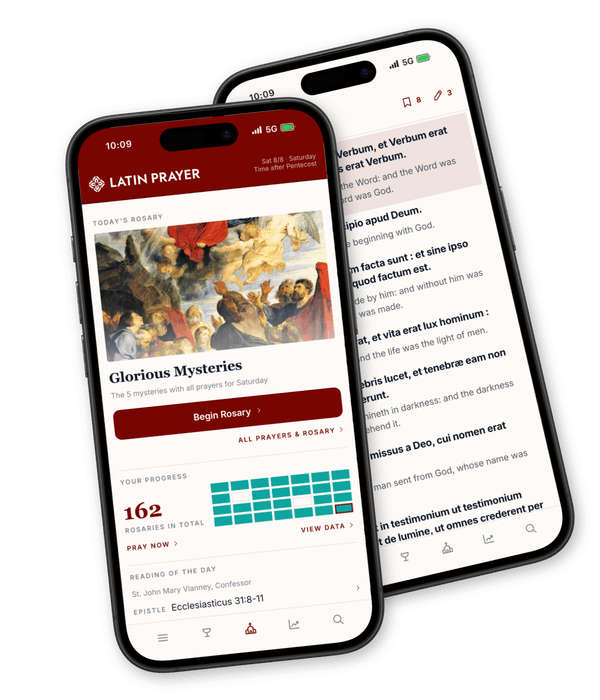
Latin Prayer: my app for praying in Latin
The Rosary, the Mass, the Vulgate and the prayers of the Church — Latin and English side by side, line by line, much of it with audio, so you can hear how it sounds. Free, no ads, for iPhone and Android.
Email digest
When there’s a new post, you’ll get a short email — at most once a day. Free, and you can unsubscribe anytime.
Der Essay Who decides what truth is? von Dushan Wegner ist auch online zu lesen: https://www.dushanwegner.com/essays/who-decides-what-truth-is/, und auf dushanwegner.com finden sich noch viele weitere Texte, Bücher und sogar T-Shirts zum Thema!
