

A reader from the USA is perplexed, and so am I. It is still about the murder of Charlie Kirk, but of course, it is also increasingly about the reactions (and: non-reactions) of so-called normal people… the so-called friends.
The reader reports ‚about friends with whom one has shared the highs and lows of life for more than 20 years, who claim to have the same moral values, give lip service to the murder, stating that political violence is never justified – yet fill out their political ballot for the party whose rhetoric and uncompromising stance have brought our society into this terrible situation.‘
Oh, yes, I know the pain this reader feels. But what do we call this pain? We know compassion and we know secondhand embarrassment, which are reflections of feelings we attribute to another person. But what do we call the pain I feel when another person is in a state of intense cognitive dissonance?
Guilty of What I Did
A cognitive dissonance is known to be a contradiction in the beliefs, values, and actions of one person.
A smoker, for example, who values life as something precious, yet actively shortens it by smoking, is in cognitive dissonance. (And the warnings on the packages are meant to make this almost unbearable. But can cognitive dissonance really be stronger than physical addiction?)
An adulterer usually believes that adultery is wrong, yet he does it. (He wants to resolve the shame and pain of cognitive dissonance by telling himself lies like: ‚The marriage was already dead‘ or ‚My spouse is to blame for what I did.‘)
The most verbose critics of capitalism regularly indulge in fine brand products – we know these salon communists.
And so on. A modern and indeed ethically interesting example of cognitive dissonance is the frequent-flying Green voters.
It is known that Green voters are the voter group that flies the most and the farthest on vacation – while simultaneously demanding flight bans, ‚for the climate‘.
What is interesting, however, is that Green voters report having the worst conscience regarding flying! (see tagesspiegel.de, 19.07.2019)
Yes, some Greens ’still notice something‘, and what they notice is a cognitive dissonance.
It Is Enough of a Penitence
In fact, the pain of cognitive dissonance, like any other pain, is there to motivate people to eliminate the cause of this pain. Yet Green voters have elevated the pain of their own dissonance, one could also say: the bad conscience, to penitence: ‚Yes, I am a hypocrite, but my suffering from these contradictions is enough penitence for my actions. And my suffering shows that I am a better person than all those who do not suffer. So I can do more of it.‘
But alas, I fear that the people the reader speaks of do not even have to practice such cognitive acrobatics to overcome their inner contradictions.
In the thinking of too many of our fellow humans, the awareness and pain regarding their cognitive contradictions are simply missing.
For example: Elections were recently held in NRW and Cologne. You encounter people who suffer from certain conditions in their children’s schools – and then they vote for exactly the parties that brought about these conditions. If you point out the contradiction to them, they become briefly aggressive, spew the usual propaganda buzzwords – and will prefer to avoid you in the future.
This or That Part
We are surrounded, in the USA as well as in Germany, by people who do not (any longer) suffer from cognitive dissonance.
We know it from people who have endured terrible traumas, such as the loss of a child or the violence of war, that they simply ‚cut off‘ certain memories. The personality is, to put it simply, split. Such a person is apparently able to engage with this or that part of their consciousness without the memories influencing each other. This ’splitting‘ saves such a person’s mental life, because if they wanted to think everything at once, the pain would be unbearable, and the person would consider suicide (which they probably did before their mind gave them a reprieve through the ’splitting‘).
However, we observe around us people whose thinking and feeling regarding society and ethics are similarly split, but not due to severe traumas, but due to intense, years-long propaganda.
Propaganda is the new lobotomy. These patients do not suffer from cognitive dissonance, not even for the sake of penitence, as propaganda has severed and desolated the connections between the conflicting areas.
The Biceps Severed
Trying to convince a leftist in the final stage with arguments and by pointing out their contradictions is like trying to get an accident victim whose biceps has been severed to do weightlifting exercises. They will become very angry – they cannot perform what you are urging them to do. And if you ‚motivate‘ them long enough, they will want to get rid of you, just as they got rid of Charlie Kirk.
(A ‚charming‘ example of cognitive splitting is provided by those who celebrated the death of Charlie Kirk online – and then lamented that they subsequently lost their job. Being killed for conservative opinions seems appropriate to them. Losing their job for celebrating this act, however, is ethically unacceptable for them.)
So what to do, the reader asks, how to deal with it?
I would first advise to calmly acknowledge the situation: We live among people for whom propaganda has chopped up the mind so much that they – unlike us – do not suffer from the brutal contradiction between perception, belief, values, and action.
In a quiet moment, we should then be radically rational and radically honest, and make a prediction about what the consequence of this fact is.
In the USA, it is whispered, it is leading to an open confrontation between conservatives and propaganda zombies. In Europe, the situation is more mixed. In Great Britain, millions recently protested against the government, but the British can quickly be pacified with ‚bread and circuses‘ (especially when the bread is served in liquid form). The Germans, as even today’s Leninists know, famously buy a ticket before occupying the platform. And of peoples known as hot-blooded, it is known that hot blood quickly tires and then demands an extensive siesta.
More Cautious Than Ever
‚Is it really that bad for us?‘ one asks another today, and the honest answer is: ‚It is much worse. We only admit it to ourselves in such small pieces as we can just barely endure.‘
Whoever calls you a ‚Nazi‘ or ‚fascist‘ today is openly saying that they actually want to see you dead. In their mind, the connection that should show them the contradiction to their ‚values‘ has been severed.
Be more cautious than ever. Admit to yourself that it is as it is. Seek within yourself the necessary strength to articulate the foreseeable consequences and next steps.
And above all: At the latest today, you should muster the courage to express to yourself what you really think, believe, and then also want to do. (And perhaps tomorrow the strength to actually do it?)
Weiterschreiben, Wegner!
Das Schreiben dieser Essays ist nur mit Ihrer Unterstützung möglich. Werden und bleiben Sie Teil meiner Arbeit!
Bitte wählen Sie Ihren freiwilligen Leserbeitrag:
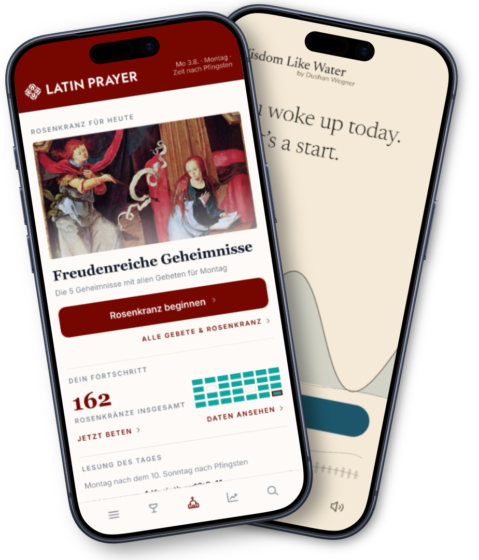
Beta: test my apps early
I’m looking for readers who test new versions of my apps before release — on Android and on iPhone. One group for both, free and no strings attached.
Email digest
When there’s a new post, you’ll get a short email — at most once a day. Free, and you can unsubscribe anytime.
Der Essay Cognitive Dissonance: When It No Longer Hurts (Them) von Dushan Wegner ist auch online zu lesen: https://www.dushanwegner.com/essays/cognitive-dissonance-when-it-no-longer-hurts-them/, und auf dushanwegner.com finden sich noch viele weitere Texte, Bücher und sogar T-Shirts zum Thema!
