

A woman complains, as small talk at a party: „I’ve heard of this solipsism. Fascinating! Unfortunately, I can’t convince anyone of it, no matter how many people I tell about it.“
This solipsism is a philosophical idea. The Latin word solus means alone, and ipse means self. If one inserts the thought verb meaning to be—that is: esse. Here conjugated as: sum.
We know sum from „cogito ergo sum,“ and that means: „I think, therefore I am.“ (Yes, some of our contemporaries inspire me, too, to attempt the negation of this sentence, thus: „I don’t think, therefore I am not.“)
„Solus ipse sum“ would therefore mean approximately: „Only I myself exist.“
Solipsism is that philosophical thought experiment according to which only my own consciousness is certain. Everything else—including all your fellow human beings and interactions with them—is, for you, indistinguishable from a projection or a dream.
A related philosophical concept is simulation theory. It assumes that an external world exists, but a different perception is simulated for our mind.
The most popular elaboration of simulation theory is the film The Matrix (Wachowski siblings, 1999). The most famous precursor is, of course, the deceiving god in the Meditationes de prima philosophia (René Descartes, 1641).
According to solipsism, the existence of an external world cannot be proven—not even one that differs fundamentally from our perception. Thus, one possible rational reaction is to assume that no external world exists. (If an object can just as well exist as not exist, the assertion of its existence is an article of faith, not an immediately and universally justified knowledge.)
That anecdote of the freshly minted solipsist derives its humor from a fundamental practical absurdity: Why does the lady argue for solipsism to people who exist only in her imagination?
Yes, the endeavor to convince the imagined fellow humans that they are imagined—it is absurd.
And yet, in a certain way, the lady from that anecdote might have been successful today.
Let me explain!
Ever Honestly Striving
I had to think of that old philosophical joke when I observed the political debates in the USA and Europe these days—ever honestly striving not to become mad myself at the madness of our time.
It is a disease in the thinking of our time, a severe functional error, when people believe that a state of affairs or a moral value is sufficiently justified by the fact that it is they who hold the corresponding thing to be true or good.
It is the quasi-official epistemological model of individualism. I call this attitude epistemic solipsism.
Therefore I Am Justified
„Epistemic“ means: concerning knowledge.
Epistemic solipsism says: „I hold it to be true, therefore it is true.“
Yes, the epistemic solipsism of our time is radical, and it goes even further when it actively employs emotion as justification: „It feels good to hold this to be true, therefore I am justified in holding it to be true.“
While such a justification of truth certainly has its place, say, in the religious realm (but better not as the only justification), epistemic solipsism can lead to devastating consequences in economics, science, or politics.
Convinced En Masse
„I think, therefore I am,“ says Descartes.
„It feels good to hold this to be true, therefore it is true,“ says epistemic solipsism.
„Why can I convince no one that he merely exists in my imagination?“, asks the lady in the philosophical joke.
Now, if epistemic solipsism is the conviction that an assumption or a moral value are sufficiently justified by the fact that I assume this assumption or feel the value thus, then people today have indeed been convinced en masse that at least epistemic solipsism is valid.
Were It Not So Fatal
No one is easier to deceive, we know, than one who thinks himself cleverer. (Or one who has not internalized the rule: If something sounds too good to be true, then it probably is not true.)
Similarly: No one is less self-determined than one who believes himself to be completely self-determined.
It is in the best, most malicious interest of the propagandists, marketing psychologists, and other manipulators that the masses are all epistemic solipsists.
List in your mind the great, consequential errors of recent decades. What do they have in common? Whether climate lie, open borders, exit from nuclear power, or abandonment of liberal democracy in favor of the totalitarian state form „Our Democracy“: The active state failure always relies on a majority of epistemic solipsists who have been convinced via psychological manipulation that each of them has arrived by himself and coincidentally at precisely the insight desired by the propaganda for the day.
Were it not so fatal, it would be downright amusing: Epistemic solipsists will, in lockstep, advocate today for the mRNA injection, tomorrow for shifting billions of euros into a notoriously corrupt country, the day after tomorrow for banning the opposition to save democracy, and every single time they will believe they have truly arrived at this opinion alone and by themselves.
Even the Enemies of That System
The only recipe against total manipulation as an epistemic solipsist is the conscious reference to proven systems of thought and value.
For thinking, the old rules of logic are recommended (such as that a statement cannot be true and untrue simultaneously).
For values, the only system is recommended that worked over the millennia by making life better—including the inner life of individuals. (Even the enemies of that system want to continue living in and from this system.)
For All the Unfortunate
Whoever holds his own knowledge to be the measure of all knowledge, whoever does not want to invoke old values and traditions as blueprint and touchstone, is as an individual initially „merely“ a tiresome, pitiable narcissist.
If the epistemic narcissist attains power, however, whether over a state (whether through function or indirectly through voting), or „merely“ over a household, then he is a danger to all the unfortunate in his sphere of influence.
„I’ve heard of this solipsism. Fascinating,“ so says the woman at the party, „unfortunately I can’t convince anyone of it, no matter how many people I tell about it.“
This the Best World?
I want to call out to the solipsists, narcissists, and everyday psychopaths around us: You are convinced that the world arises from your thoughts, that your feelings determine what reality is—and this is the best world you can think of? What miserable thoughts you cultivate! What sadistically, masochistically ideas your uncultivated mind begets.
If I were a solipsist, I would think up a far more pleasant world.
Yes, perhaps I should be a solipsist. It would be more pleasant for everyone.
I just have to convince enough people that they exist merely in my imagination.
Then the people will surely all be cleverer right away. More polite and prettier anyway.
Weiterschreiben, Wegner!
Das Schreiben dieser Essays ist nur mit Ihrer Unterstützung möglich. Werden und bleiben Sie Teil meiner Arbeit!
Bitte wählen Sie Ihren freiwilligen Leserbeitrag:
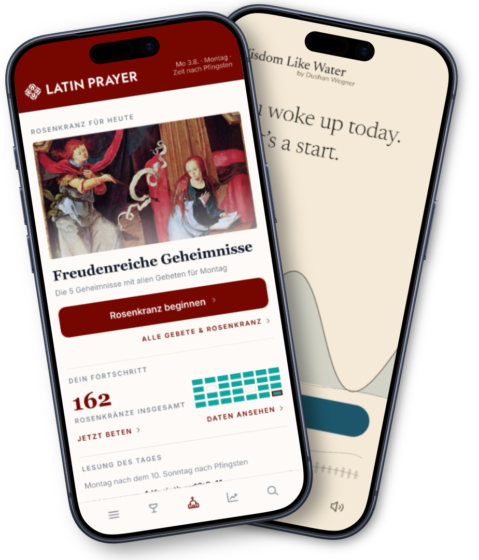
Beta: test my apps early
I’m looking for readers who test new versions of my apps before release — on Android and on iPhone. One group for both, free and no strings attached.
Email digest
When there’s a new post, you’ll get a short email — at most once a day. Free, and you can unsubscribe anytime.
Der Essay Epistemic Solipsism von Dushan Wegner ist auch online zu lesen: https://www.dushanwegner.com/essays/empiric-solipsism/, und auf dushanwegner.com finden sich noch viele weitere Texte, Bücher und sogar T-Shirts zum Thema!
