
- English
- German
“Lebenslüge” is one of those German words that have no direct translation. Like “Zeitgeist” or “Gratismut.”
But wait! Like most of these magical German words, it is a composite.
“Lebenslüge” is made of two words: “Leben” and “Lüge.”
“Leben” means: Life.
“Lüge” means: Lie.
Taken literally, “Lebenslüge” would translate to “life-lie.”
It was actually the Norwegian playwright Henrik Ibsen who first coined the concept: livsløgnen.
“Take the life-lie from an average man,” Ibsen has his character say, “and you take his happiness along with it.”
While a Norwegian invented it, it was the Germans who kept the concept “Lebenslüge” alive. Alfred Adler recast it as “Lebensirrtum,” but it was “Lebenslüge” that entered the common corpus. Germans kept the concept and now it counts as theirs. But I hear that Norwegians practice one or two Lebenslügen of their own.
Let me attempt to describe the “Lebenslüge”!
A “Lebenslüge” is the lie that your biography, as you tell it yourself, depends upon.
Taking away a person’s “Lebenslüge” feels to him like killing him, as you would be destroying the concept he has of himself. Hence, a person afraid of having his “Lebenslüge” taken will fight you in self-defense. And he will feel no qualms about destroying you, even outright killing you. Technically he is “only” fighting for his own abstract concept of himself. But to him it feels as if he is literally fighting for his life!
Examples: The man or woman who delays or neglects his or her family for a “career,” putting a cold corporation before God and children. Or women who actually kill their child in their womb. They sure need some grand “Lebenslügen.”
NGO-henchmen who spend their lives tearing down their own nations. Some of them might be plain evil, but a number of them run on massive “Lebenslügen.”
Actually, the older I get and the more I see, the more I wonder how many of the “truths” I was taught in school were plain, big “Lebenslügen.”
Well, “Lebenslüge” is a concept that Germans understood and were wary of back when they were smart. But today Germany basically tries to run on “Lebenslügen.” Germany believes a) the world climate needs saving, and b) Germany can save it by dismantling its economy, while actively destabilizing society and overwhelming the welfare state. If it all weren’t so tragic, it would be almost funny.
We actually find this specific state of mind all around the world. And the same NGOs and evil actors not only foster the “Lebenslügen,” they viciously attack anyone telling the truth and hence endangering the “Lebenslügen.”
Every time a person or an NGO-infiltrated society attacks you for telling the truth, the reason is: You have threatened their “Lebenslüge.”
The danger of “Lebenslügen” is, of course, that in the end reality always wins. A life built on lies is like a house built on sand. Yet, paraphrasing Bertrand Russell, many would sooner die than give up their “Lebenslügen.” In fact, they do so.
Let us not lie about “Lebenslügen.” Most of us have them. And it is scary and painful to let them go. Giving up your “Lebenslügen” actually is related to “being born again,” which requires prior death. Dying is quite often painful.
Yet there is no other way to freedom. The old me has to die, as we have been taught:
And you shall know the truth: and the truth shall make you free.
Keep writing, Wegner!
Writing these essays is only possible with your support. Become and stay part of my work!
Please choose your voluntary reader contribution:
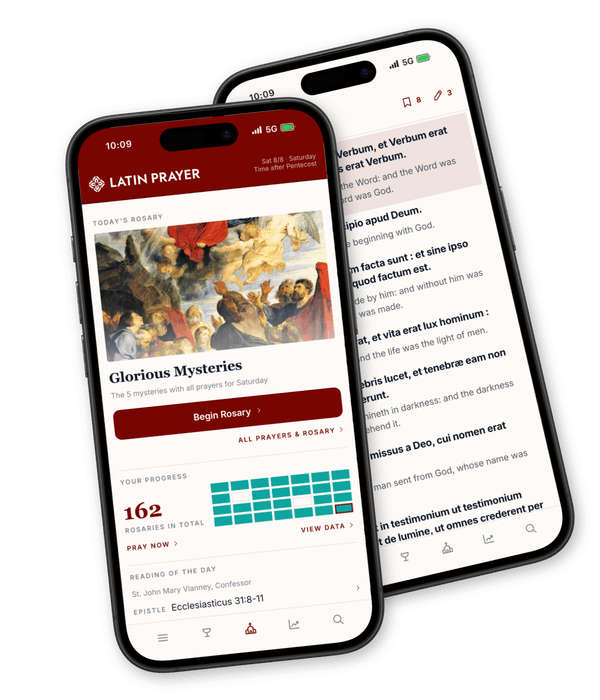
Latin Prayer: my app for praying in Latin
The Rosary, the Mass, the Vulgate and the prayers of the Church — Latin and English side by side, line by line, much of it with audio, so you can hear how it sounds. Free, no ads, for iPhone and Android.
Email Notification
When there’s a new post, you’ll get a short email — at most once a day. Free, and you can unsubscribe anytime.
Der Essay You love your Lebenslügen, don’t you? von Dushan Wegner ist auch online zu lesen: https://www.dushanwegner.com/essays/your-lebensluegen/, und auf dushanwegner.com finden sich noch viele weitere Texte, Bücher und sogar T-Shirts zum Thema!
